Showing posts with label philip larkin. Show all posts

Saturday, 23 December 2017

larking again

Nobody heard him, the dead man,
But still he lay moaning:
I was much further out than you thought
And not waving but drowning.

Poor chap, he so loved larking
And now he’s dead
it must have been too cold for him his heart gave way,
they said.

Oh, no no no, it was too cold always
(Still the dead one lay moaning)
I was much too far out all my life
And not waving, but drowning.                                    (Stevie Smith)

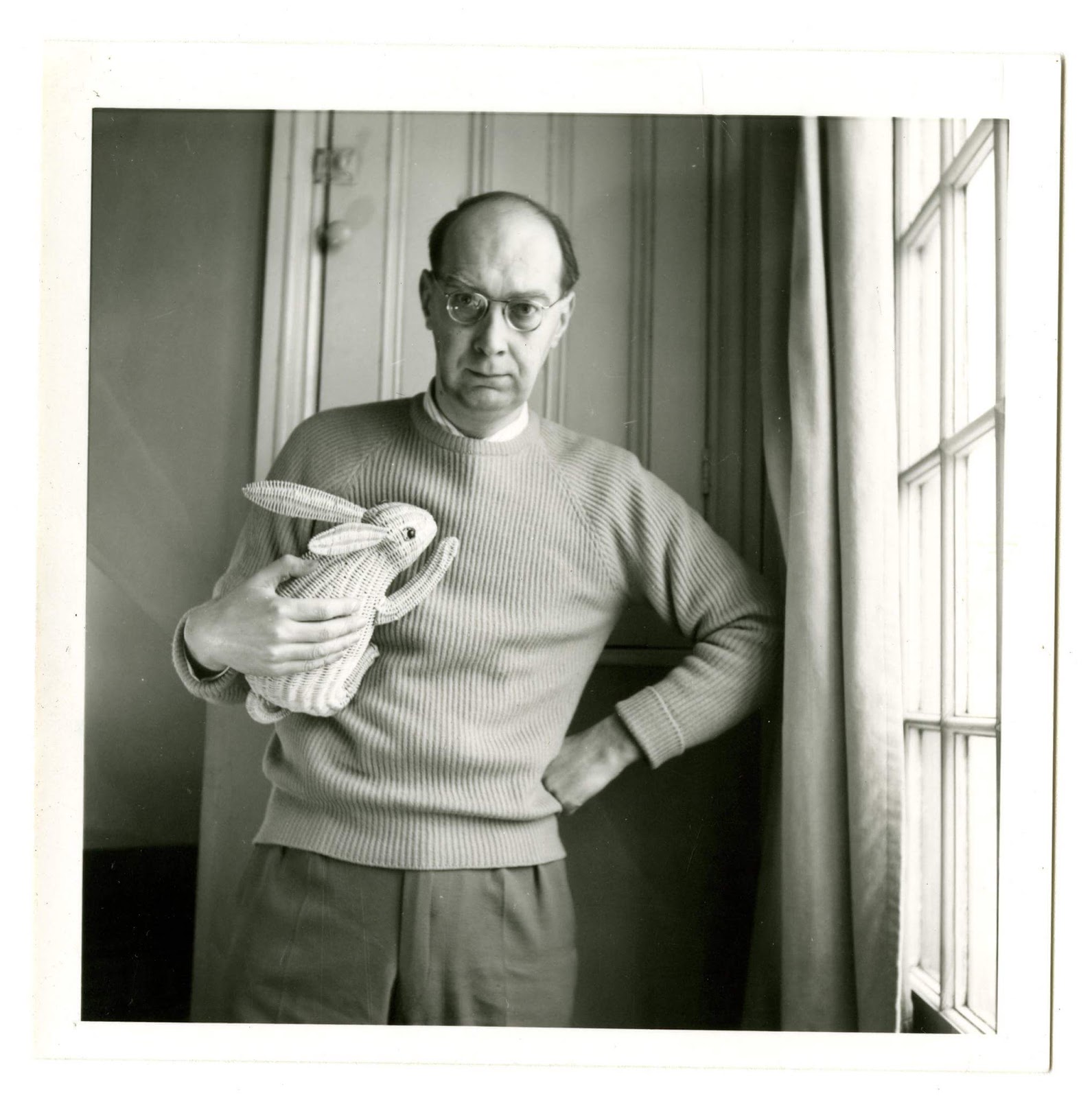
Somewhere I read that Philip Larkin enjoyed this famous poem because he could imagine the first line of the second verse was “Poor man; he so loved Larkin.”

I love Larkin for his poetry and his wit, but mainly for his honesty when writing jazz reviews, such a contrast to today’s obsequious and fawning pundits. In 1969, for example, he wrote:
“If I were to frame Larkin’s Law of Reissues it would say that anything you haven’t got already probably isn’t worth bothering about. In other words, if someone tries to persuade you to buy a limited-edition of the 1924-5 sessions by Paraffin Joe and his Nitelites, keep your pockets buttoned up; if they were any good, you’d probably have heard them at school, as you did King Oliver, and have laid out your earliest pocket money on them.
                Everything worthwhile gets reissued about every five years.”

We have to bear in mind that Larkin was at school in the middle-to-late 1930s, one of the true golden ages of jazz, so he’d have been buying contemporary stuff released before the shock of the be-bop era and the inception of baffling forms of jazz such as free, acid, funk and smooth (smooth! makes sign of a crucifix). He wrote his Law of Reissues over thirty years later, by the lamp glow of the residual radiance of jazz’s silver age, light-years away from where we are now. Jazz was yet to arrive at the Darwinian multiple-bifurcation which would eventually lead to universal chaos.

What would he make of today’s scene? He was certainly a waver, but I have the feeling that he’d now be more of a drowner. And I suspect he’d have trouble finding anything to buy other than reissues. An emerging previously never-released King Oliver, originally rejected because it wasn’t good enough, would seem a jazz detectorist’s dream.

“Nobody heard him, the dead man; but still he lay moaning” just about sums it up for me.

Happy Christmas

Thursday, 21 December 2017

Philip Larkin's Jazz

The poet Philip Larkin was also jazz critic for the Daily Telegraph from 1961 to 1971. His often acerbic comments were reproduced in book form, title “All What Jazz,” a handy dip-into sort of historical guide to contemporary music, or jazz at least.

Almost 50 years ago, he wrote:

“My favourite New Year’s resolution is Cyril Connolly’s for 1929: ‘Resolve: to be altogether more advanced and intelligent.’ And clearly, according to Leonard Feather in the Melody Maker, I’m going to need to be. Of course jazz is not dying, he says, unless by jazz you mean swinging jazz, Dixieland jazz, or anything in straight two or four. Of course, that’s on the way out, and still more American jazz clubs will collapse. But anything in Latin, or Cuban, or 5/4 rhythm, any freedom music ‘in which the beat is often suspended. Distended or ignored at certain points’ anything with electric or electronic sounds, anything ethnic or with sitars – why, man, the scene is made. By a subtle stroke of page make-up, this cheer-leader is printed shoulder-to-shoulder with an article recalling the deaths in 1967 of Edmond Hall, Muggsy Spanier, Willie Smith, Buster Bailey, Herman Chittison, Pete Johnson, Red Allen, Billy Strayhorn, Rex Stewart, Sidney de Paris, Stuff Smith, Jimmy Archer and one or two more.”

What an annus horribilis 1967 must have been  (my words). Larkin continues:

“Readers of this column may rest assured that as long as there is any swinging or Dixieland jazz in straight two or four on recent records they will hear about it. The rest will be judged by the degree to which it approximates to the excitement produced by the aforesaid swinging or Dixieland jazz.”

A quote from the frontispiece of “All What Jazz” is from Miles Davis, and was originally published in Down Beat on 13th June 1968:

“But if something (i.e. Ornette Coleman) sounds terrible, man, a person should have enough respect for his own mind to say it doesn’t sound good. It doesn’t to me, and I’m not going to listen to it. No matter how long you listen to it, it doesn’t sound any good.”

Larkin was renowned for his love of ‘traditional’ jazz, Dixieland and New Orleans and was often critical of the avante garde. In the introduction to my 1984 edition of his book, he writes:

“In any case, my views haven’t changed. If Charlie Parker seems a less filthy racket today than he did in 1950 it is only because, as I point out, much filthier rackets succeeded him…”

These words sound iconoclastic in 2017. Yet I find myself sympathising. Jazz these days appears to be anything a musician wants it to be. Take any rhythm, beat or melody and add the word “jazz” and – voila! – it is jazz. No it isn’t. It’s not jazz. Maybe it’s smooth-jazz, for example, but that’s not jazz. We need a champion of jazz; we need somebody to ride to the rescue to take it away from the floss and dross being passed off today as jazz and thereby restore its authentic gloss and substance.

These comments could appear contradictory. After all, as you’ve probably noticed I’m a huge fan of Charles Mingus, undeniably one of the most innovative and exciting musicians of all time, sometimes testing the tolerance of audiences to the very limits with his avante-garde ideas and compositions, but even he said that his music should not be shoved into one of the pigeon-holes of categorisation. Just call it Mingus music, he said. That’s sweet subtle irony… one of the greatest jazz-men of all time calling for his own music to be stripped of the title “jazz.” But he understood. I think many don’t understand these days. If Philip Larkin were alive today, I’d be writing him letters of support.

Sunday, 21 February 2010

there i've said it again


Philip Larkin hit the news last week when an eponymous society made an appeal for funds to raise a statue of him in Hull. For my international following (Sleepy in China), I’ll explain that Philip Larkin is a famous English poet of the middle 20th century.

He wrote such classic lines as “They Fuck You Up, Your Mum and Dad” and “Why should I let the toad work squat on my life?” Needless to say, members of the Philip Larkin Society claim their man to be the best poet ever. In my view he was good, but for me his laureateship was earned as a jazz critic – an honest one for whom flummery and pontification were anathemas.

Honest jazz critics have almost died out. Now all jazz musicians, every jazz genre, everything with ‘jazz’ in the title, are regarded as great by those lucky enough to be paid to write about the music. I don’t know whether this is because modern critics fear being sued, or whether they simply want an easy ride, but harsh truths as in “this band is crap” are very hard to find. Just read Clive Davis in the Times if you doubt me.

I know I harp on about good and bad jazz. Sometimes I feel I’m a lone voice in a wilderness of heretics and vested interest. Misuse of the word ‘jazz’ is rife and endemic in today’s warped society. Yet Philip Larkin’s views on jazz accord with mine. If I could have one wish, apart from winning the lottery, having my time over again and maybe a few other secret desires involving Felicity Kendall, it would be to invite Philip Larkin to supper and have the opportunity to discuss jazz with him.

But he’s long dead. For me, his lasting legacy is a fine compilation of reprints of his erstwhile regular column in the Daily Telegraph, 1961 to 1971. They are bound together in a dog-eared old book entitled “All What Jazz.” A copy sits proudly on my bookshelf.

This is not the first time my blog has mentioned Larkin. I might mention him again. The man certainly features in the top half of my personal list of 3000 people to toast over supper. What I especially liked about him was his genuine criticism of many performers, yet later he wrote that he’d wished he’d been a little more forthright. How I wish today’s reviewers and critics would display such sincerity and humility.

I sometimes doubt my own opinions because the views of so many published commentators appear to be at variance with mine. But then I pick up “All What Jazz” to dip into the pages and find instant reaffirmation. I’m right; the rest (bar Larkin and maybe his pal Amis) are wrong.

This, then, is a bit of an appeal, silent though it may be. The statue’s design has been selected. It will depict Larkin hurrying for the train. I don’t know why. For perpetuity he will be portrayed as trying to avoid being late. Or is he striding to escape Hull? Whatever the conceptual aspirations of the sculptor, I hope that when Larkin’s statue is eventually ready to be erected in the city centre, the words “and genuine jazz lover” can be read after the inevitable inscription “poet.” I like to think he would have appreciated the ambiguity.

Thank you.

Sunday, 12 July 2009

fine and mellow

One of my favourite books about jazz is “All What Jazz” by Philip Larkin. It’s a compilation of articles he wrote as recordings critic for the Daily Telegraph over a ten year period in the 60s and 70s. Most books about jazz are written retrospectively, with commentators using hindsight to try to analyse events and find meanings in what happened. Larkin was writing contemporaneously as huge changes were taking place in the jazz world. And I appreciate the fact that in places, he sounds perplexed and almost distraught at some of the albums he was sent for review.

When his words were hot off the press, I didn’t necessarily agree with him. I’m an entire generation behind Larkin. He could associate with Pee Wee Russell while my formative years were spent in the aural company of Parker, Coltrane and Mingus. But today, I am in simpatico with Larkin’s sentiments. This is no epiphany on the road to Damascus, if you’ll permit the mixed metaphor. Rather I walk a parallel path of gradual enlightenment.

What prompted this blog is that yesterday I listened to Geoffrey Smith’s Jazz Record Requests on BBC Radio 3. He played a track by a band named Led Bib. It left me totally bemused and puzzled. The music bears a jazz tag, yet as far as I can see the link is tenuous at best. Even the instruments sounded as if they belonged more on a rock stage at the 02 than in the one-time smoky atmosphere of Minton’s. My view is that these musicians have a perfect right to perform whatever type of music they like, but I question whether they should be allowed to call it jazz. I like to think that Smith is merely doing his duty by broadcasting the stuff.

Later in the programme, he played a Billie Holiday number. In the line-up were names Larkin applauded – Lester Young, Ben Webster, Vic Dickinson, Gerry Mulligan, Roy Eldridge and more. Some say Holiday declined towards the end. If Fine and Mellow recorded in 1957 is any indication, commentators who believe that talk rubbish. The hair at the back of my neck curled and bristled. This was Holiday at her best; this was jazz at its best. Changing the subject slightly, I think I can remember a Norfolk girl (Stella Goodey) doing this number superbly. I think she’s still around on the circuit. Catch her if you can. She’s a wonderful performer of Holiday and Bessie Smith numbers.

Like Larkin, I can understand that the essence of jazz is evolution. Led Bib shares genes with Billie Holiday in the same way that cabbages and humans have something like 38% common DNA. I can understand why the music carries the appellation jazz, but I can’t agree with it. When I scratch my head in bemusement, I feel as if I’m at one with Philip Larkin. I forget my gripes by losing myself in his writings of July 1966 and if I’m seen as a bit of a dinosaur, at least I’m a happy one.