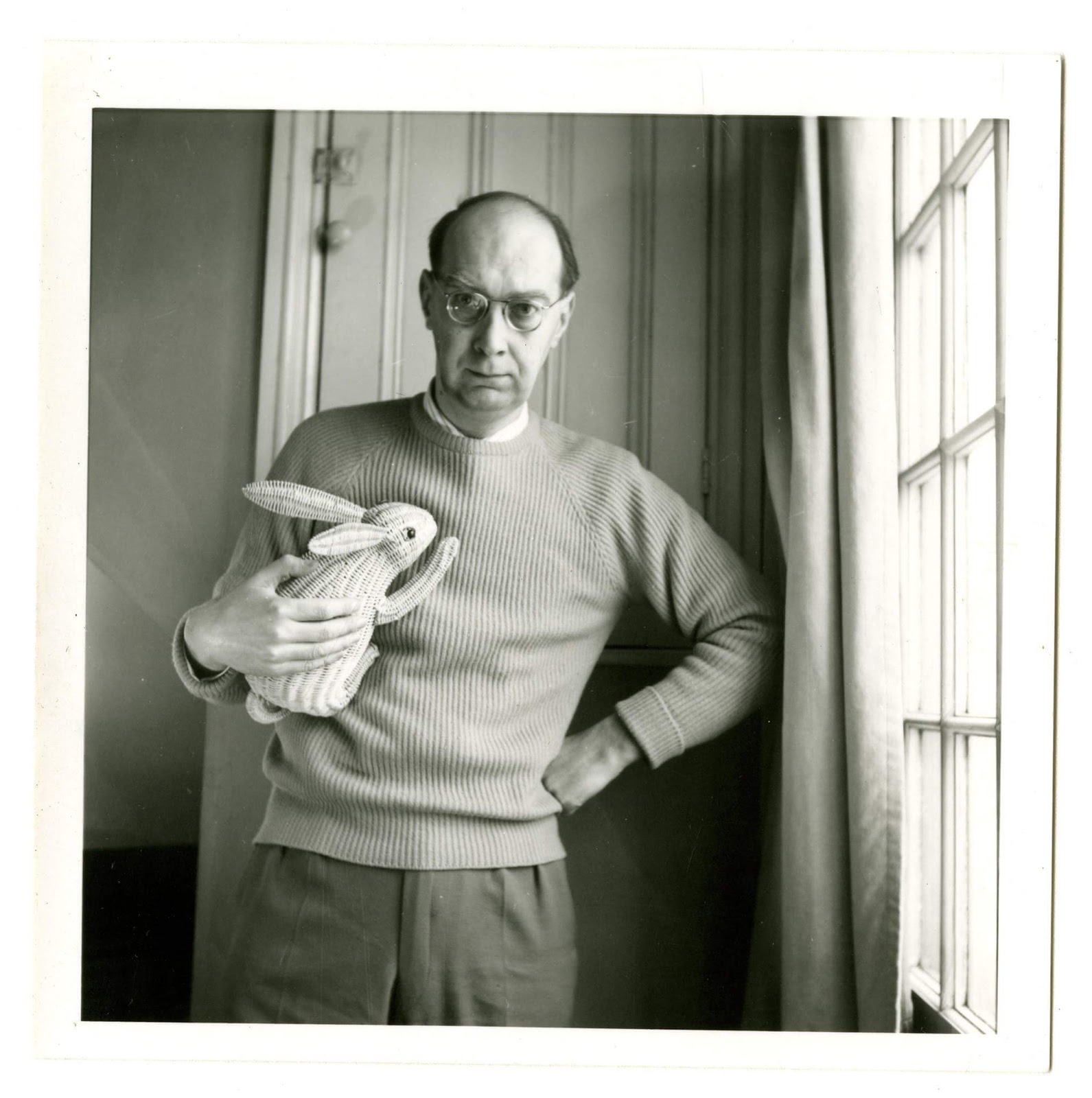
I'm a little vague about law of copy and intellectual rights, so I hope I'm not trespassing where the more knowledgeable fear to tread.
A fairly recent purchase is "Chan," a book of poetry by Hannah Lowe.
Among the poems is one titled "Mingus"
Charles Mingus on the ward at midnight, come
through rain and hail in dripping gabardine
to matron, standing firm and handing him
a pen. A note? Say what ma'm? Please. Goddam.
This short verse puzzled me. I know Mingus was in and out of hospital himself but I couldn't quite put this forlorn picture of him into any context until I found notes in the back of the book.
Quote - Charles Mingus broke off his UK tour to travel to Southampton to visit Harriott in hospital. They had never met but Mingus arrived late in the night and was refused entry. Harriot died shortly afterwards. Unquote.
The great die young. Joe Harriott was 44. A thrusting southpaw pioneer, he probably upset quite a few jazz purists in his day. Chris Barber recorded his composition "Revival" in (I think) 1962, quite a surprise for me steeped as I was in British Trad and swing at the time and only recently discovering that I quite enjoyed 'modern' jazz. After playing bebop, he teamed with Shake Keane (flugelhorn) and started to develop free form jazz (which then I didn't understand and still struggle with) and also produced a fusion of jazz and traditional Indian music. Harriott refused to be constrained by ropes; he fought outside the ring.
Even Hannah Lowe, obviously an admirer of Harriott's work, wrote in her poem "What Is and Isn't Jazz?" (a question I ask repeatedly) the following closing stanzas:
Mr Harriott's laboratory tests
are in the early stages
and though
he should be admired
(perhaps)
does jazz need constant broadening?
Are fresh kicks desired daily?
Mr Harriott, stop crying
through your horn
and start playing again,
please!
I've been listening to jazz in most incarnations for over 60 years - and in my opinion Ms Lowe's question is one of the most pertinent I've ever encountered in the genre - does jazz need constant broadening? What is the answer?
Showing posts with label charles mingus. Show all posts
Wednesday, 24 January 2018
strollin' by charles mingus
The title is a deliberate misrepresentation. This entry has nothing to do with Charles Mingus, but everything to do with strolling, being a sequel to my last post about coddiwompling.
To coddiwomple means to travel in a determined fashion towards an indeterminate destination, and in conversation with a friend of equal abstraction, a few more words for walking began to seep into my frontal lobes. "Flaneur," for example, a word with provenance attributed to Baudelaire, meaning a person who saunters urbanely, a stroller at leisure. "Boulevardier" another French word, this time implying a socialite, strolling around town not for the purpose of seeing but in order to be seen presumably dressed in expensive finery.
This led to a more detailed examination of words in popular use to describe walking or walkers. The list below can't pretend to be exhaustive, but what came out of this casual anecdotal study is that no word is a precise synonym of another; they all hint at something slightly different, a bit like the claim, perhaps apocryphal, that Eskimos have a vast lexicon of terms to describe snow.
Here's a few, verbs and nouns mixed randomly:
Wanderer; pedestrian; wayfarer; tramp; nomad; promenade; peregrinate; roamer; rambler; ambler; hike; rover; trekker; cruiser; noctivagent; trudge; traipse; divagate; perambulate; potter; march; stride; travel; journey.
If anyone can add to this list, especially obscure and foreign words, I'd be delighted to hear.
Labels:
charles mingus,
coddiwomple,
flaneur,
strollin',
walking,
west highland way
Friday, 5 January 2018
if charlie parker were a gunslinger...
Charles Mingus wrote a number titled “Gunslinging Bird” with
the subtitle “If Charlie Parker were a gunslinger there’d be a whole lot of
dead copycats.”
No doubting the truth of that.
I’ve just cycled 20 miles from “In Search of England” to “In
Search of Scotland,” the exercise bike being set up in my study in front of book
shelves. All the way I listened to “Fontessa,” a 1960 album by The Modern Jazz
Quartet. To be truthful, it didn’t inspire me to ride faster but then I suppose
John Lewis never anticipated that one day he’d be used to alleviate the boredom
of 25 minutes going nowhere.
However, the thought struck me that, as far as I know, nobody
ever copied The Modern Jazz Quartet. It was an acquired taste, a little like
coriander and leek soup, and while their chamber-jazz music was immensely
popular at the time, I’m not sure the market could have had the resilience to
take more than one such band. I enjoyed the sound then and in small doses I
enjoy it now. It was certainly unique, partly with the scoring and performance,
and partly because of the pairing of Vibraphone and piano in a day when jazz
fans would tend to scratch their heads if the front-line didn’t include a
saxophone or a clarinet.
Laid back; relaxed and perhaps a little romantic – that was
the band’s inimitable style… late night music for half-way between turning down
the lights and having a cigarette. Well – the first track anyway. It never
worked for me, but then I had other problems; it seemed to work for my friends.
Today, laid back and relaxed isn’t the ideal motivator for trying to burn a few
more calories than yesterday. Tomorrow, I’ll return to Mingus and something
which gallops – perhaps “O.P.” or “Hog Callin’ Blues.”
The album is: The
Shoes of the Fisherman’s Wife – CBS Jazz Masterpieces 4608222
The
line-up of Gunslinging Bird is:
Dick
Williams (tpt) Jimmy Knepper (tb) Booker Ervin,
John Handy, Benny Golson, Jerome Richardson (reeds)
Roland Hanna (p) Theodore Cohen (vibes)
Charles Mingus (b) Dannie Richmond (d)
John Handy, Benny Golson, Jerome Richardson (reeds)
Roland Hanna (p) Theodore Cohen (vibes)
Charles Mingus (b) Dannie Richmond (d)
Recorded:
New York 1st November 1959.
Thursday, 21 December 2017
Philip Larkin's Jazz
The poet Philip Larkin was also jazz critic for the Daily
Telegraph from 1961 to 1971. His often acerbic comments were reproduced in book
form, title “All What Jazz,” a handy dip-into sort of historical guide to
contemporary music, or jazz at least.
Almost 50 years ago, he wrote:
“My favourite New Year’s resolution is Cyril Connolly’s for
1929: ‘Resolve: to be altogether more advanced and intelligent.’ And clearly, according
to Leonard Feather in the Melody Maker, I’m going to need to be. Of course jazz
is not dying, he says, unless by jazz you mean swinging jazz, Dixieland jazz,
or anything in straight two or four. Of course, that’s on the way out, and
still more American jazz clubs will collapse. But anything in Latin, or Cuban,
or 5/4 rhythm, any freedom music ‘in which the beat is often suspended. Distended
or ignored at certain points’ anything with electric or electronic sounds,
anything ethnic or with sitars – why, man, the scene is made. By a subtle
stroke of page make-up, this cheer-leader is printed shoulder-to-shoulder with
an article recalling the deaths in 1967 of Edmond Hall, Muggsy Spanier, Willie
Smith, Buster Bailey, Herman Chittison, Pete Johnson, Red Allen, Billy
Strayhorn, Rex Stewart, Sidney de Paris, Stuff Smith, Jimmy Archer and one or
two more.”
What an annus
horribilis 1967 must have been (my
words). Larkin continues:
“Readers of this column may rest assured that as long as
there is any swinging or Dixieland jazz in straight two or four on recent
records they will hear about it. The rest will be judged by the degree to which
it approximates to the excitement produced by the aforesaid swinging or
Dixieland jazz.”
A quote from the frontispiece of “All What Jazz” is from
Miles Davis, and was originally published in Down Beat on 13th June
1968:
“But if something (i.e. Ornette Coleman) sounds terrible,
man, a person should have enough respect for his own mind to say it doesn’t
sound good. It doesn’t to me, and I’m not going to listen to it. No matter how
long you listen to it, it doesn’t sound any good.”
Larkin was renowned for his love of ‘traditional’ jazz,
Dixieland and New Orleans and was often critical of the avante garde. In the
introduction to my 1984 edition of his book, he writes:
“In any case, my views haven’t changed. If Charlie Parker
seems a less filthy racket today than he did in 1950 it is only because, as I
point out, much filthier rackets succeeded him…”
These words sound iconoclastic in 2017. Yet I find myself
sympathising. Jazz these days appears to be anything a musician wants it to be.
Take any rhythm, beat or melody and add the word “jazz” and – voila! – it is
jazz. No it isn’t. It’s not jazz. Maybe it’s smooth-jazz, for example, but that’s
not jazz. We need a champion of jazz; we need somebody to ride to the rescue to
take it away from the floss and dross being passed off today as jazz and
thereby restore its authentic gloss and substance.
These comments could appear contradictory. After all, as you’ve
probably noticed I’m a huge fan of Charles Mingus, undeniably one of the most
innovative and exciting musicians of all time, sometimes testing the tolerance
of audiences to the very limits with his avante-garde ideas and compositions,
but even he said that his music should not be shoved into one of the
pigeon-holes of categorisation. Just call it Mingus music, he said. That’s sweet
subtle irony… one of the greatest jazz-men of all time calling for his own
music to be stripped of the title “jazz.” But he understood. I think many don’t
understand these days. If Philip Larkin were alive today, I’d be writing him
letters of support.
Friday, 1 December 2017
The Black Saint and the Lady Sinner
“When Mr. Mingus first asked me to write a review of the
music he composed for this record, I was astonished and told him so. I said I
thought I was competent enough as a psychologist but that my interest in music
was only average and without any technical background. Mr Mingus laughed and
said he didn’t care, that if I heard his music I’d understand…
… Mr Mingus thinks this is his best record. It may very well
be his best to date for his present stage of development as other records were
in the past. It must be emphasized that Mr Mingus is not yet complete. He is
still in a process of change and personal development. Hopefully the
integration in society will keep pace with his. One must continue to expect
more surprises from him.”
Edmund
Pollock, Ph.D., Clinical Psychologist.
“I wrote the music for dancing and listening. It is true
music with much and many of my meanings. It is my living epitaph from birth til
the day I first heard of Bird and Diz.”
Charles
Mingus.
Words within quotation-marks are taken out of context with
each other from liner notes for Mingus’s 1963 album “The Black Saint and the
Sinner Lady.”
I wonder why nobody has taken this music and choreographed a modern ballet to the score.
Tuesday, 28 November 2017
discography - charles mingus
Image from "Charles Mingus Discography" by Michel Ruppli, published by Norbert Ruecker in Frankfurt 1982, dis-enhanced by my own annotations.
This is proving to be an essential source book. It has resided on my study shelf for years and I refer to it a lot.
Labels:
charles mingus,
discography,
michel ruppli,
shafi hadi
Sunday, 26 November 2017
shafi hadi revisited - update
A few
years ago I blogged about my favourite saxophonist: Shafi Hadi. The first five
paragraphs of this post are lifted directly from that original piece with one
or two minor amendments and edits. The rest is an update, what I’ve since
discovered about this shadowy genius:
One of
the great unsung heroes of the alto and tenor saxophones was a man named Curtis
Porter. He’s probably better known as Shafi Hadi, perhaps having changed his
name on religious grounds during the late 1950s.But even as Shafi Hadi, few
will have encountered him because he appears to have enjoyed no more than the
metaphorical 15 minutes of fame. By the middle 60s, he seems to have dropped
into semi-obscurity.
I first
heard him in about 1962 or 1963 when Mingus and his Tijuana Moods album erupted
into my hitherto cloistered British-trad-jazz-revival consciousness. Suddenly I
was listening to a sax player capable, in my opinion, of trouncing the great
Bird himself.
His
tone was cut of the best diamond, sharp yet plaintiff, stuffed full of 100
carat emotion and bluesy fire. Solos were considered and intelligent, delivered
with exacting precision. Phrasing and intonation were often laconic; he
eschewed the fusillades of notes. For him, his jazz was not about increasing
the numbers of notes per second by running frenetically up and down the chords,
but was more to do with turning short sentences and phrases into pithy sayings
of expressive substance. Pauses were as significant as the notes themselves;
somehow he stitched silence with sound to produce solos of the utmost beauty.
Little
is known about him. He started playing in various R&B bands (before R&B
become a corrupted concept) and I know for a while he was associated with Hank
Mobley, recording on at least one album with him. His first recording venture
with Mingus was “The Clown” in early 1957 (about 6 months after becoming a jazz
player at the age of 26) and he was involved with the great bassist on at least
seven albums until middle 1959.
During
1958 he collaborated with John Cassavetes on the sound track for the producer’s
film “Shadows” in which Mingus was also involved. Cassavetes acted out the
roles as Hadi improvised accompanying music. Cassavetes wrote: “It was
terrific. He played the story of his life to music.” The actor also records
that Hadi was married, was large in stature as well as creativity, and stood
physically tall. Nat Hentoff in the liner notes for “The Clown” writes that
Hadi had said after the recording: “I think more jazz groups should tell
stories like Mingus does, instead of just playing notes and techniques.”
Update:
A
rumour went around that he’d died of a heroin overdose in the early 70s, but a
Wiki entry suggests he was still around on the music scene in 1975, and in 1977
he was reported to have collaborated with Mary Lou Williamson on her
composition “Shafi” although typically the source is vague about the extent of
his contribution. A couple of years later he was said to have worked in some
way with Sue Mingus (Charles’ widow) to provide original scores of her late
husband’s music.
In
coda, I can’t help be struck by the similarity in tone and phrasing between
Shafi and another brilliant alto sax player, Jackie McClean, especially on
Mingus’ “Blues n Roots” album. Mingus was never a composer to look backwards;
he always edged forward, so I’m surprised he employed a sideman sounding so
much like an earlier one. Perhaps I’m wrong on this; I’m not technically minded
with music. I’d be interested to hear expert views, and to know whether anyone
has more information on what happened to such a skilled and gifted jazz
musician.
Labels:
alto saxophone,
charles mingus,
curtis porter,
hank mobley,
jackie mclean,
jazz,
mystery,
shafi hadi
Friday, 27 November 2009
do you know what it means to miss new orleans?

Suppertime is never really good for philosophical debate. This could be because antacids and digestive juices react chemically with abstractions. Or maybe it’s the fact that our suppers tend to be excuses for quaffing copious volumes of red wine, port and single malt. Either way, as evenings process into late nights, supper conversation tends to become a little more intense, pensive and irrational in nature.
Here is the question from a recent bibulous encounter over plates of stilton, brie “Rustica” and Jacob’s cream crackers: if jazz were a language, which would it be?
One diner thought Spanish, reasoning that Spain’s fiery national traits were a strong parallel for the evolution of our favourite music. It’s a large country of diverse landscapes and enough land to allow very different forms of culture to co-exist happily, without unduly restricting parochial and regional aspirations. It can be at once introspective, romantic and exciting – this is all reflected in the language. My Spanish vocabulary is limited to calling “Hola!” across a road so I nodded sagely without attempting to contradict. Somebody did start to relate the Basque separatist cause to the history of Jazz, but by then the stopper was out of the whisky. “Mingus is to jazz what the Basques are to Spain,” explained my friend, as if I had a chance of understanding what he meant. Was Mingus a Basque separatist? “It’s an analogy,” he despaired as I poured myself a large tumbler of malt.
The Maestro thought that he could detect a clear Teutonic influence. “We like to pretend jazz is one original phrase after another, but in reality proponents tend to adhere to quite strictly established formats. Pass the whisky.” I obeyed. “The Germans are like that,” he continued. “Hitler tried to ban jazz, but that’s only because he didn’t understand the music.”
“It’s Italian,” proclaimed a visiting marine biologist. “Totally mad, chaotic and undisciplined,” he argued, but then the man is a self-confessed devotee of Ornette Coleman.
“Probably Latin,” I ventured.” Laughter rippled around the table. “A dead language,” said the cello player. But Latin is not a dead language; it’s an immutable language. That’s the great strength of Latin. No interfering scholar attempts to tinker with it and send it careering towards that oblivion where pedants while away idle hours writing letters to ‘The Times’ about the inexorable dilution of the English language, totally ignoring 2000 years of linguistic history. “You know where you stand with Latin,” I explained. “It’s cast iron.” The port came round again, closely followed by whisky “You see, there’s only one true jazz – New Orleans. All the others are scions, off-shoots, hybrids, but they are never true original jazz. New Orleans is THE jazz – it can’t move or change. Time and idioms marched on, leaving New Orleans unchanged. Like Latin.”
“It’s all double-Dutch to me,” chipped-in Mrs Pooter Dodman. “The X-Factor is just about to start. Shall we go through to the lounge?”
The Maestro and I stayed at the table, gently swirling whisky. “Bad year for mushrooms,” he slurred.
“Is that an analogy?” I asked.
He peered at me through the bottom of his glass.
“No. It’s a Bunnahabhain,” he said.
Labels:
bunnahabhain,
charles mingus,
jazz,
new orleans
Monday, 28 September 2009
if silence is golden, you ain't worth a dime, 'cos your mind is on vacation but your mouth is working overtime
Live jazz in pubs and clubs can be a tricky issue. The good manager will be aware of the need to maintain a fine balance between the wishes of those there to listen to music and have a drink at the same time and those there to drink with a background of music. Sometimes the two groups can’t be reconciled easily, especially in pubs; they are there for different reasons and often mingle uncomfortably.
A pub near Norwich ran Friday lunchtime jazz sessions, presenting such local luminaries as Stella Goodey, James Goodwin and Derek Cubbitt. The music was played against an unremitting soundscape of chinking plates, scraping chairs on a tiled floor, repeated creaking of a servery door and buzz of conversation.
Yet neither musicians nor audience complained about background noise. They knew they were in an environment where about half the audience were there to hear them, the other half out for a pleasurable time. Nobody competed for ears. Somehow everyone found what they were looking for. And the same applied in most pubs dishing up successful live jazz.
I was reminded of this when I listened recently to a CD – Charles Mingus on Charles Mingus. In the introduction to the singular “Folk Forms No. 1” he appeals for quiet. “Restrain your applause… in fact don’t even take any drinks… or no cash registers ringing etc.” This was Mingus pretending to be recording in the electrifying atmosphere of a club, when in reality he was in the studios. He wanted the musicians to play as if they had the stimulus of an audience.
Some of the best jazz recordings are live in front of a vociferous audience – tracks by Wynton Marsalis, Chris Barber and Roland Kirk to name just five (Marsalis and Kirk should be there twice). I actually relish LP tracks reverberating with the rattle of ice in a glass, the murmur of voices at the bar and the thunder of rapturous applause. (That’s a Jungian slip – who talks about LPs these days?) Let’s never forget that our music was conceived and nurtured in drinking houses and dance halls and came of age in clubs and bars. Some will argue with justification that jazz started to decline the day it moved into the concert hall. In my view, jazz, and perhaps music generally, should be heard only with somebody shouting “Nigel” in the background. (Mercy, Mercy, Mercy – Cannonball Adderley – at least it sounds like Nigel to me).
In my modest opinion, if Mingus had really wanted his musicians to relax as if they were in a club atmosphere, he should have invited an audience to dance, holler and start fights. Or maybe supply his men with viper, but that’s another story. We need a campaign – more live music in front of audiences prepared to demonstrate their enjoyment of what they’re hearing.
Labels:
charles mingus,
jazz,
live music,
marsalis,
rahsaan roland kirk
Tuesday, 1 September 2009
if I Hadi talking picture

One of the great unsung heroes of the alto and tenor saxophones was a man named Curtis Porter. He’s probably better known as Shafi Hadi, no doubt having changed his name on religious grounds during the late 1950s.But even as Shafi Hadi, few will have encountered him because he appears to have enjoyed no more than the metaphorical 15 minutes of fame. By then, he’d dropped into semi-obscurity.
I first heard him in about 1962 or 1963 when Mingus and his Tijuana Moods album erupted into my hitherto cloistered British-trad-jazz-revival consciousness. Suddenly I was listening to a sax player capable, in my opinion, of trouncing the great Bird himself.
His tone was cut of the best diamond, sharp yet plaintiff, stuffed full of 100 carat emotion and bluesy fire. Solos were considered and intelligent, delivered with exacting precision. Phrasing and intonation were often laconic; he eschewed the fusillades of notes. For him, his jazz was not about increasing the numbers of notes per second by running frenetically up and down the chords, but was more to do with turning short sentences and phrases into pithy sayings of expressive substance. Pauses were as significant as the notes themselves; somehow he stitched silence with sound to produce solos of the utmost beauty.
Little is know about him. He started playing in various R&B bands (before R&B become a corrupted concept) and I know for a while he was associated with Hank Mobley. His first recording venture with Mingus was “The Clown” in early 1957 (about 6 months after becoming a jazz player at the age of 26) and he was involved with the great bassist on at least seven albums until middle 1959.
During 1958 he collaborated with John Cassavetes on the sound track for the producer’s film “Shadows” in which Mingus was also involved. Cassavetes acted out the roles as Hadi improvised accompanying music. Cassavetes wrote: “It was terrific. He played the story of his life to music.” The actor also records that Hadi was married, was large in stature as well as creativity, and stood physically tall. Nat Hentoff in the liner notes for “The Clown” writes that Hadi had said after the recording: “I think more jazz groups should tell stories like Mingus does, instead of just playing notes and techniques.”
And then Shafi Hadi apparently disappeared from the centre of the jazz scene. Nobody seems to know where he went, or what he did, although rumours abounded. He’d become a painter; he’d been in prison; he’d died from a drugs overdose in Philadelphia in the early 1970s. None of this is substantiated. He comes across as a shadowy figure. Writers of liner notes give sketchy details of the man, but rarely show any sign of knowing him well or even considering him important. And yet he’d demonstrated the capacity to be a monumental instrumentalist.
My favourite Hadi solos are on “Los Mariachis” from Mingus’ Tia Juana Moods Album. Listen to it, and if anyone knows more about this enigmatic and quiet genius, I’d love to hear.
Subscribe to:
Posts (Atom)